www.civilsocietyindia.com, www.civilsocietyonline.com

Vision | Mission | About Us | Civil Society Team | Partners
Articles related to Corporate Social Responsibility
Civil Society Images Section
Heritage | Eco Tourism | Green Cures | Traditional Foods | Buy from NGO | Spiritual Talk | Organic Counter | Where to donate | Where to Voulnteer


June 2009 Edition


Piyush Jha

Hindi cinema’s radical mainstream


Young directors redefine success in Mumbai

Saibal Chatterjee
Mumbai

A new breed of spirited filmmakers have been chipping away of late at the shibboleths of mainstream Bollywood and using the medium to articulate social and political concerns of contemporary relevance. In their hands, Hindi cinema has acquired a new edge, a fresh vitality and a degree of relevance that it hasn't had for years.

"This had to happen," says Anurag Kashyap, maker of the quirky Dev D. "The 'new wave' has gone mainstream with a vengeance thanks to the advent of a crop of writers and directors whose creative impulses stem from the diverse 'real India' environs that they have come from."

Kashyap has mellowed with time but has lost none of the inner frisson that triggered films like Paanch, Black Friday and No Smoking.

When he asserts that his latest release, Gulaal, a simmering love story with strong political undercurrents that plays out in a benighted feudal setting, is "an expression of my anger at the system", Kashyap, in his thirties, speaks not just for himself but also for all young Mumbai filmmakers.

The spirit of adventure and non-conformism that this brand of reality-oriented cinema represents was once largely confined to the fringes of the Hindi film industry. It has moved centrestage today.

"Outsiders bring with them stories that are unusual, surprising, and firmly rooted in the actual world," says Kashyap, a middle class Varanasi boy who was educated in Gwalior's Scindia School and Delhi's Hansraj College.

So even as the Mumbai film industry finds itself smack in the middle of an acrimonious tug-of-war between film producers and multiplex owners over the spoils of the business – the long-running impasse has resulted in no major Hindi film being released since April 4 – film aficionados have reason to be happy with the way things are turning out. The kind of cinema they love – intelligent and meaningful yet engaging and energetic– has grown in strength. Their flow into the multiplexes has palpably increased.

In the weeks immediately before the forced dry spell kicked in, discerning audiences in India had a remarkably wide cinematic palette to choose from – apart from Kashyap's Dev D. and Gulaal, films like Delhi 6, Little Zizou, Firaaq, Barah Aana and Luck By Chance were lighting up screens across the country all at once. None of these was an average Bollywood film peddling the usual crowd-pleasing narrative ingredients. Yet each, in its own specific ways, gave the audience something to cheer and celebrate.

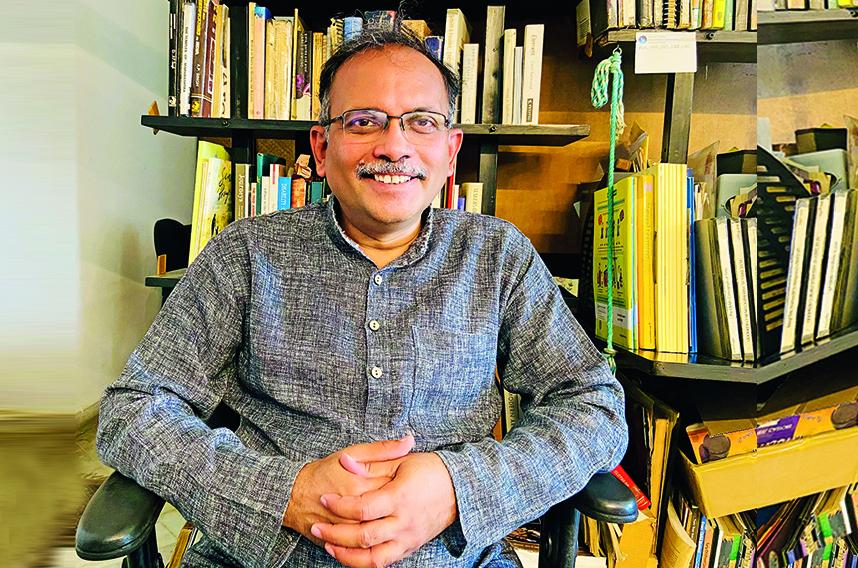
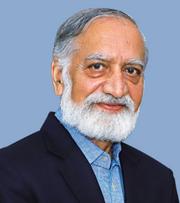
Irfan KamalFor Raja Menon, director of Barah Aana, Dev D has shown the way forward. "Dev D takes mainstream cinema elements and uses them in a way that is completely out of the box," he says. "Even the manner in which Anurag Kashyap has used music in the film is strikingly unconventional.

Yes, music is an integral part of our films, but the director of Dev D seems to say that it can be used differently." Many young filmmakers like Menon are being similarly inspired.

"There is definitely a growing market for films that don't follow the norms of mainstream movie making," feels Menon. The response to Barah Aana, a black comedy peopled by characters that we see around us every day – drivers, waiters, watchmen – but choose to ignore, is proof enough, he adds. "These down and out characters represent the flipside of the economic boom," he says. "They are very much a part of the Indian landscape no matter how hard we try to pretend that they are not." The inference is clear. Says Menon, "It is possible today to make a film about a driver, a waiter and a watchman and get it released."

Barah Aana is the story of three very, very ordinary men– one of them (Naseeruddin Shah) is 'dead' in the official records, another is a migrant watchman (Vijay Raaz) who is pushed around in the big city like a heap of garbage – who stumble upon what they believe is an easy way to make money. But as they hurtle down the path of petty crime, their troubles multiply and they quickly sink into a quagmire beyond their control. Barah Aana eschews songs, dances and cheap thrills; it is just a spirited little film with a whole lot of spine, firmly ensconced in the realities that impact our world. In an earlier era, it wouldn’t have made it past the scripting stage.

When he started out as a storyteller about seven years ago, Menon – he grew up in Bangalore and began his professional life in Mumbai making ad films and Bollywood trailers – wanted to craft "my kind of movie". But he was compelled to compromise at every step of the production process. He ended up with Bus Yun Hi (2003), which fell between two stools. "I had to put in commercial elements simply to ensure that the film got made," he says.

But the Barah Aana experience has added up to something infinitely more rewarding. "I did not have to dilute the essential spirit of the film. The response from the audience and the industry has been extremely heartening," he says. It is pretty obvious that the times have changed and the industry, propelled by the fast changing economic dynamics of showbiz, is more willing than ever before to let the mavericks play their own game.

As a case in point, take the Studio 18- promoted Indian Film Company's hands-off approach to celebrated screenwriter and photographer Sooni Taraporevala's directorial debut, Little Zizou. "The producers gave me unconditional creative freedom," she says.The result was a gem of a bittersweet ode to Mumbai's Parsis, a community that Taraporevala understands better than anybody else in the business.

Little Zizou, a contemporary English-language comedy that features some of Mumbai's top Parsi actors (John Abraham, Boman Irani, Shernaz Patel, Kurush Deboo, Mahabanoo Mody-Kotwal), touches upon intra-community politics, the issues of freedom of expression and religious bigotry and the pains and challenges of growing up in a world where harsh reality constantly impinges upon youthful flights of fancy. In Taraporevala's words, the film taps into the real world but leavens it with gentle flourishes of the imagination.

“This is the first time that I have done a film inspired by my own cultural background," says Taraporevala, a true-blue Mumbaikar.

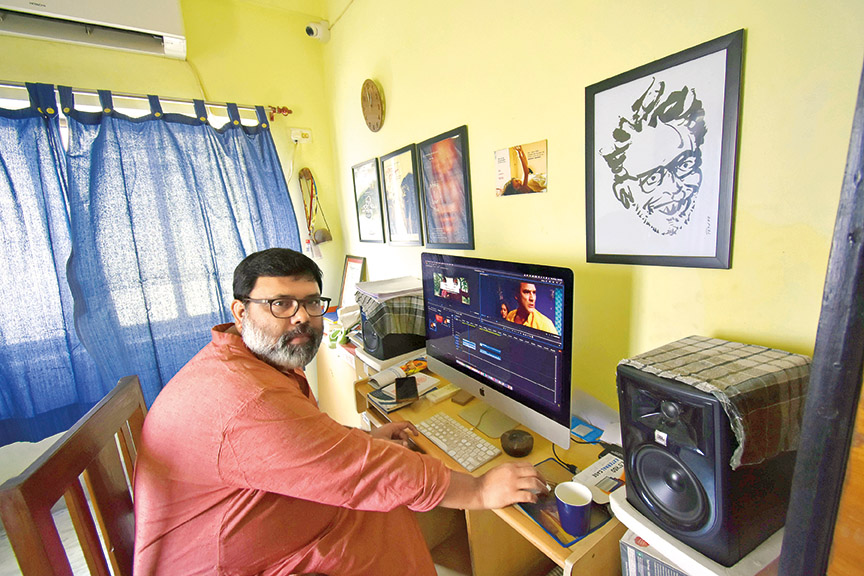
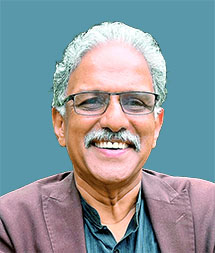
Anurag KashyapThis engagement with the time and space that they live in also characterises the work of filmmakers younger than the 52-year-old Taraporevala. By addressing contemporary socio-political issues while adopting innovative ways to deliver entertaining fare, directors like Sudhir Mishra (Hazaaron Khwaishein Aisi, 2003), Rahul Dholakia (Parzania, 2005), Rajkumar Gupta (Aamir, 2008), Neeraj Pandey (A Wednesday, 2008) and Manish Jha (Mathrubhoomi: A Nation Without Women, 2003 and Anwar,2007), among others, have been pushing the boundaries of what is viable and acceptable within the mainstream moviemaking space.

One of the more interesting stories in this new emerging filmmaking scenario in Mumbai is that of Irfan Kamal. His father, Kamal Master, was a super-successful choreographer who made megastar Amitabh Bachchan dance to his dictates in films by Manmohan Desai and Prakash Mehra. Irfan grew up steeped in the ethos of masala movies, but when he decided to branch out as an independent filmmaker, he moved as far away as he could from where he had started.

The yet-to-be-released Thanks Maa, Irfan's maiden film, is a gritty, starkly realistic drama about a Mumbai street urchin who finds an abandoned baby and sets out in an impossible search of the infant's mother. "For me," says Irfan, "cinema isn't just entertainment. It is life. So it has to be rooted in reality no matter what."

He has turned a little idea about rag-pickers and abandoned children into a searing drama of survival on the mean streets of a big city. "My story does have a pronounced element of fantasy embedded in it – the central premise of the Thanks Maa narrative might not be possible in real life – but I took pains to ensure a stamp of authenticity on the way the film plays out. The research that I did on the subject of street children and statistics regarding babies that are abandoned in Mumbai helped," he says.

Irfan Kamal firmly believes that for filmmaking to be relevant as a profession one has to possess the ability and inclination to tell one's own stories. "Look inwards, do not ape anybody, and make the film that you want to make it" – that is the credo that drives him. On the evidence of Thanks Maa, he has set strikingly high standards for himself.

With the exception of the young boy who plays the central character, Municipality, all the Thanks Maa actors are street children that Irfan groomed for the camera much before Slumdog Millionaire catapulted the plight of others of their ilk on to the global media radar."None of these children had a fixed address, so keeping track of them was a challenge," he recalls.

Challenges are an intrinsic part of the careers of those who work within the parameters of the Mumbai movie industry but dare to flout the ground rules of its profit-first strategy. Sudhir Mishra, who is in the process of developing a modern-day cinematic rendition of William Shakespeare's classic tragedy, Hamlet, with Farhan Akhtar and Kareena Kapoor in the lead roles, knows a thing or two about surviving against odds in an industry that has for long frowned upon risk takers. But the story is quite different today.

Mishra is currently shooting a feature film "on a tight budget" inspired by the plight of civil liberties activist Dr Binayak Sen, who has been languishing in a Chattisgarh jail for over two years. "There are many Dr Binayak Sens in this country who pursue their cause away from the media glare," says Mishra. "This film is not about him – I don't have the right to make a film on him because I cannot claim personal knowledge of his life and beliefs. It's my view of a man like him. It's a tribute to his spirit."

Raja MenonMishra continues: "The protagonist of my narrative is a man like Binayak Sen. Many people want to save him, but he is so committed to his cause that he does not want to be saved. Men like him are an anomaly in our cynical times, which do not want value heroes." The maker of films like Iss Raat Ki Subah Nahin and Dharavi believes that the time has come for Indian cinema to find its own voice. "Much of our cinema, even its so-called modern, alternative strand, is too referential. It thrives on imitation. It is not really our own cinema. We have to learn to break free and do our own thing," he argues.

Rahul Dholakia would probably be in agreement. He is on a 10-day schedule away from completing Lamhaa, which probes the pain and suffering of strife-torn Kashmir through a tale set against the separatist movement. But it isn't a small film - the cast of Lamhaa includes Sanjay Dutt, Bipasha Basu and Anupam Kher. And as Dholakia has discovered to his chagrin, blending the mechanics of big-budget moviemaking with the rhythms of politically pointed cinema is anything but a cakewalk.

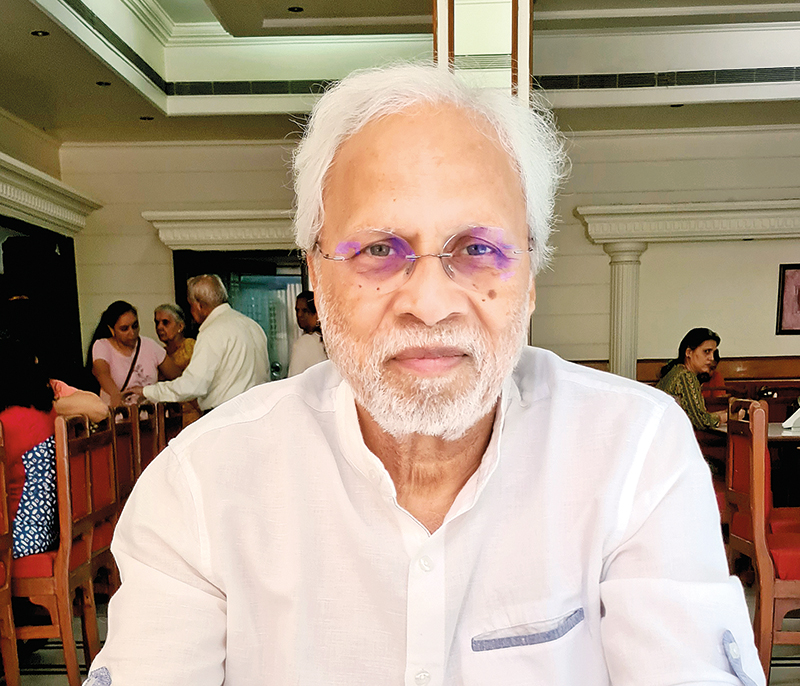
Piyush Jha, on the other hand, has just wrapped up Sikandar, a less starstudded film about a young Kashmiri orphan boy who wants to be a footballer but discovers that peace is an elusive commodity in the Valley. With the likes of Madhavan, Sanjay Suri, Parzan astur (who played the main protagonist in Dholakia's Parzania) and Ayesha Kapoor (who essayed the role of the deaf-mute and blind girl in Sanjay Leela Bhansali's Black) in the cast, Sikandar was shot in a single 35-day schedule in the heart of Kashmir.

"Sikandar explores the plight of the orphans of Kashmir, but the film is cast in the mould of a fast-paced thriller," says Jha. "It is important to tell a story in a way that grips the audience. Only then can you slip in the elements that create awareness about the issues in question – in this case, the conflict in the Valley and its repercussions on children."

Jha asserts that Sikandar "does not shout from the rooftops" because that would defeat the very purpose of making the film. "My film isn't targeted at the already converted. It has been taken to a popular level so that the message reaches a wider audience," he explains.

What is the message inherent in Sikandar? Says Jha: "Kashmir isn't really like what the mass media makes it out to be. Yes, there is strife and militancy out there, but they are on the wane and young people in the Valley are no different from those in other parts of the country. They, too, want to join the mainstream and taste the fruits of economic prosperity. My protagonist plays football. How common is that? Contrary to popular perception, he does not go around with an AK-47."

Jha cites the success of Rajkumar Hirani's Lage Raho Munnabhai (2006) to buttress his argument that a story must be told well in order to get a point across. "The film dealt with a serious issue – Mahatma Gandhi's relevance in contemporary India– but it did not adopt a sombre tone. It worked because it had tremendous popular appeal," he says. "We must keep in mind the fate of the parallel cinema of the 1970s – it fizzled out because many of the leading lights of the movement delivered dry, drab and didactic films without thinking about the audience."

Dholakia's predicament is of a totally different nature: it lies in the endeavour to strike a balance between narrative substance and mode of delivery. "I cannot make Lamhaa with the same spirit that I made Parzania, which was a small, independent film. Lamhaa is more mainstream fare. So I cannot tell the story that I want to tell – I am under pressure to commercialise the film," says the director. "I
made a choice not knowing the price I would have to pay in the process of seeing this film through to its logical conclusion."

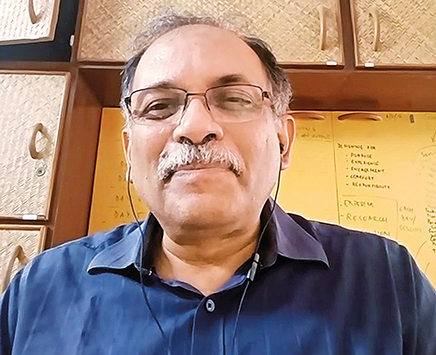
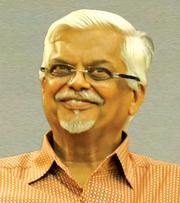
Sudhir MishraDholakia grants that new avenues have opened up and young filmmakers have more opportunities today to experiment with unconventional ideas and themes. "But in order to do justice to politically sensitive subjects, you have to stay within the small, independent filmmaking space. As soon as you enter the domain of big budget cinema, you have to tone down your approach. Compromises become inevitable – you cannot go all out to lay bare the truth on the ground," adds Dholakia.

That probably explains why films like Aamir and A Wednesday had a smoother ride. They were small ventures devoid of many big stars and, more importantly, their politics was probably more in line with established notions of what is right and what isn't. As Govind Nihalani, veteran cinematographerdirector who pioneered the cause of socially meaningful yet commercially sustainable cinema with seminal films like Aakrosh (1980) and Ardh Satya (1983) says, "Today, movie plots are built around terrorism as the new demon… The war on terrorism is given a markedly nationalistic spin. I don't see too many films being made with any degree of depth and sensitivity."

One might indeed quibble about the subliminal message in A Wednesday – this story about a common man who is so frustrated with the state of affairs that he takes upon himself the onus of eliminating a bunch of terrorists seems to suggest that the only way one can fight violence is with more violence – but the film does deliver a blow in favour of the kind of cinema that pulls no punches in capturing the warts, distortions and contradictions of our nation and society.

Cinema with a conscience – cinema that goes beyond the confines of mere entertainment in a quest for truth – is still evolving in this part of the world, but it is here to stay despite all the obstacles that dot its path.

________________________________________________________________________________________________________

Newsvine del.icio.us        

Want to give feedback on this article


Name
Email
Comment on this article
(Not more than 250 character)


Disclaimer

The views expressed here are strictly personal and civilsocietyonline.com does not necessarily subscribe to them. We shall endeavour to upload/publish as many of the comments that are submitted as possible within a reasonable span of time, but we do not guarantee that all comments that are submitted will be uploaded/published. Messages that harass, abuse or threaten other members; have obscene, unlawful, defamatory, libellous, hateful, or otherwise objectionable content; or have spam, commercial or advertising content or links are liable to be removed by the editors. We also reserve the right to edit the comments that do get published. Please do not post any private information unless you want it to be available publicly.


Top

Your feedback on this story...
_________________________________________________________________________________________________________


About Us | Site Map | Privacy Policy | Contact Us | ©2007 Civil Society

.
........................................
Webmaster Vishwanathan ( vishu4@rediffmail.com )